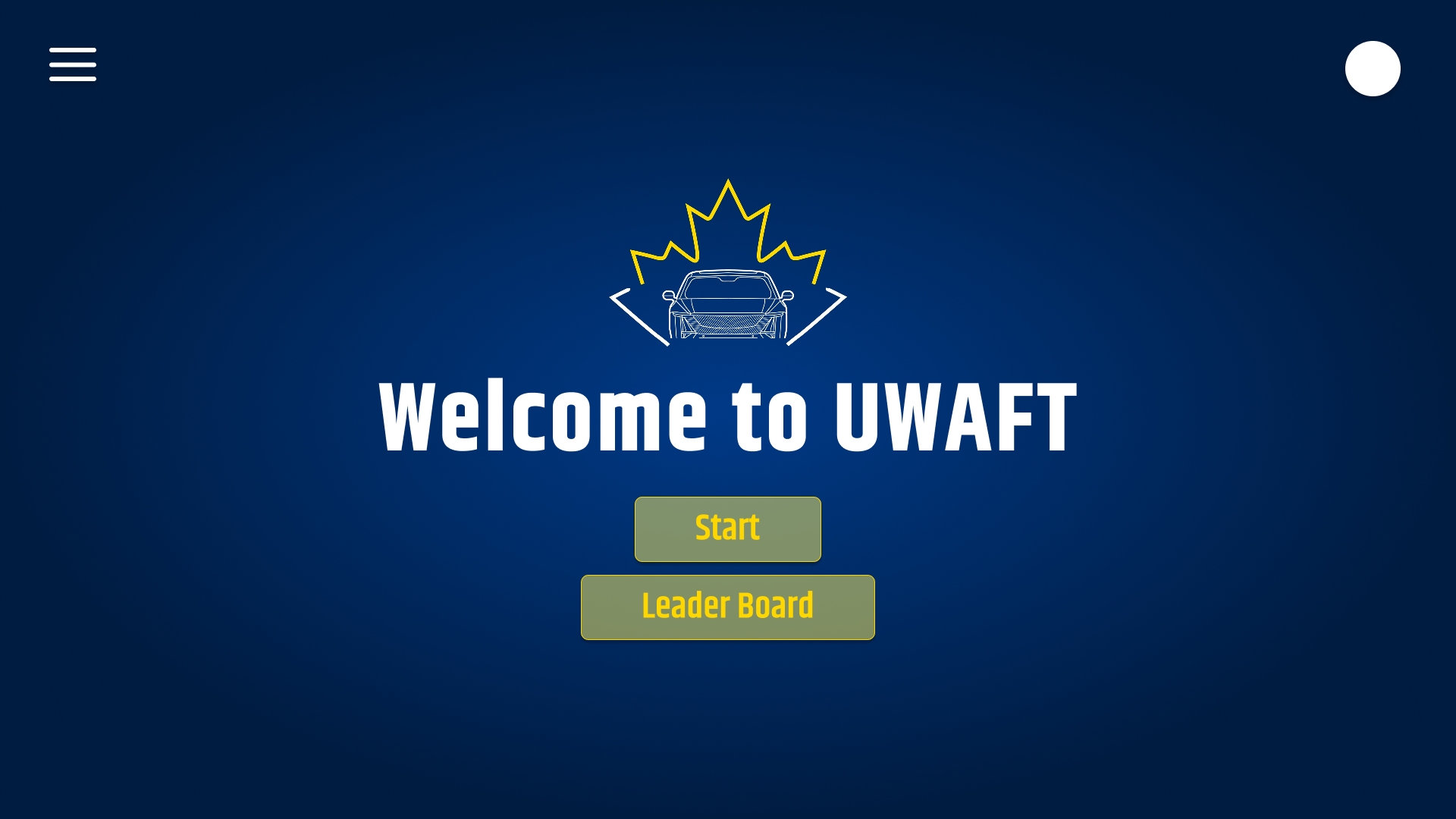
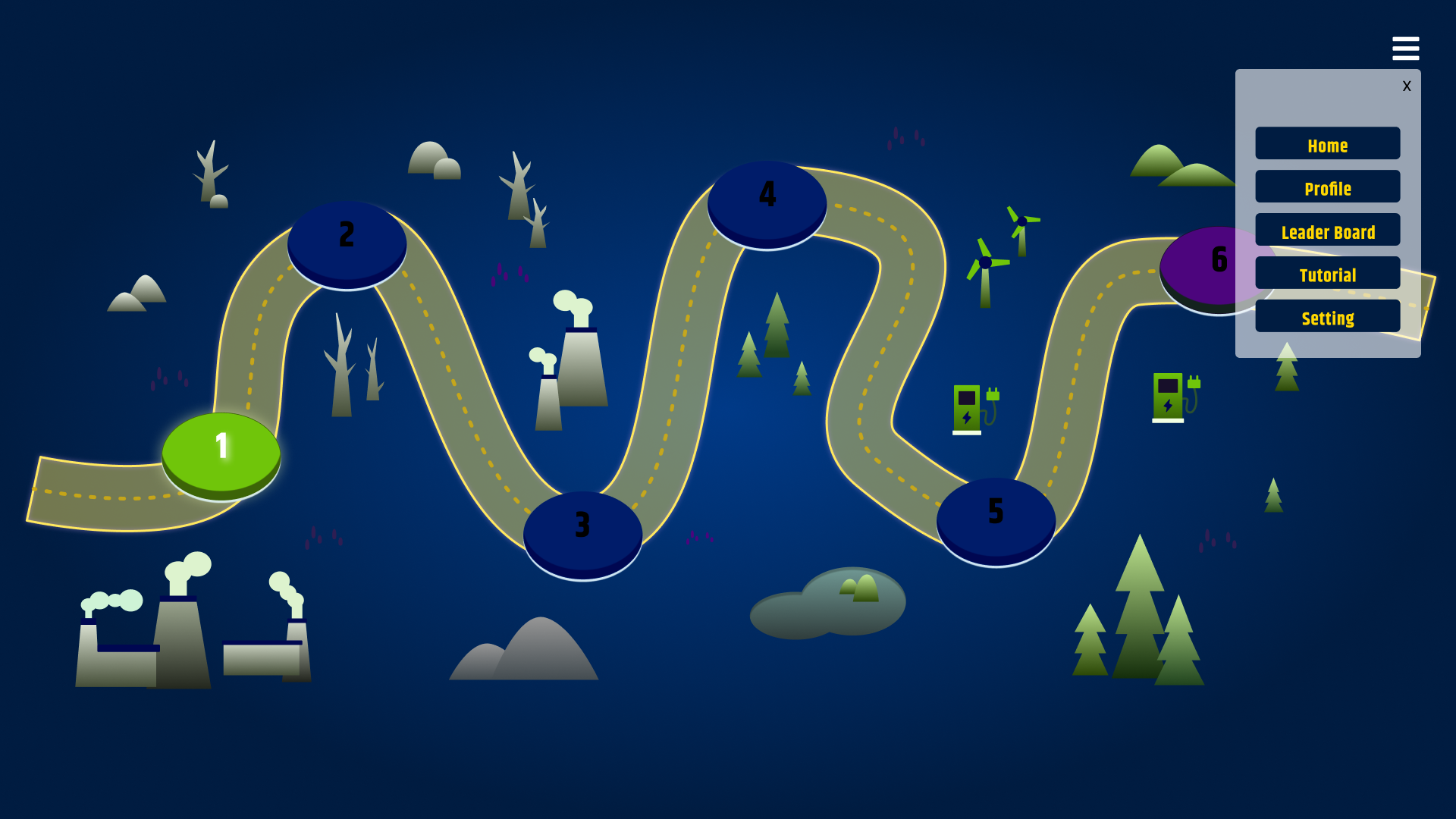
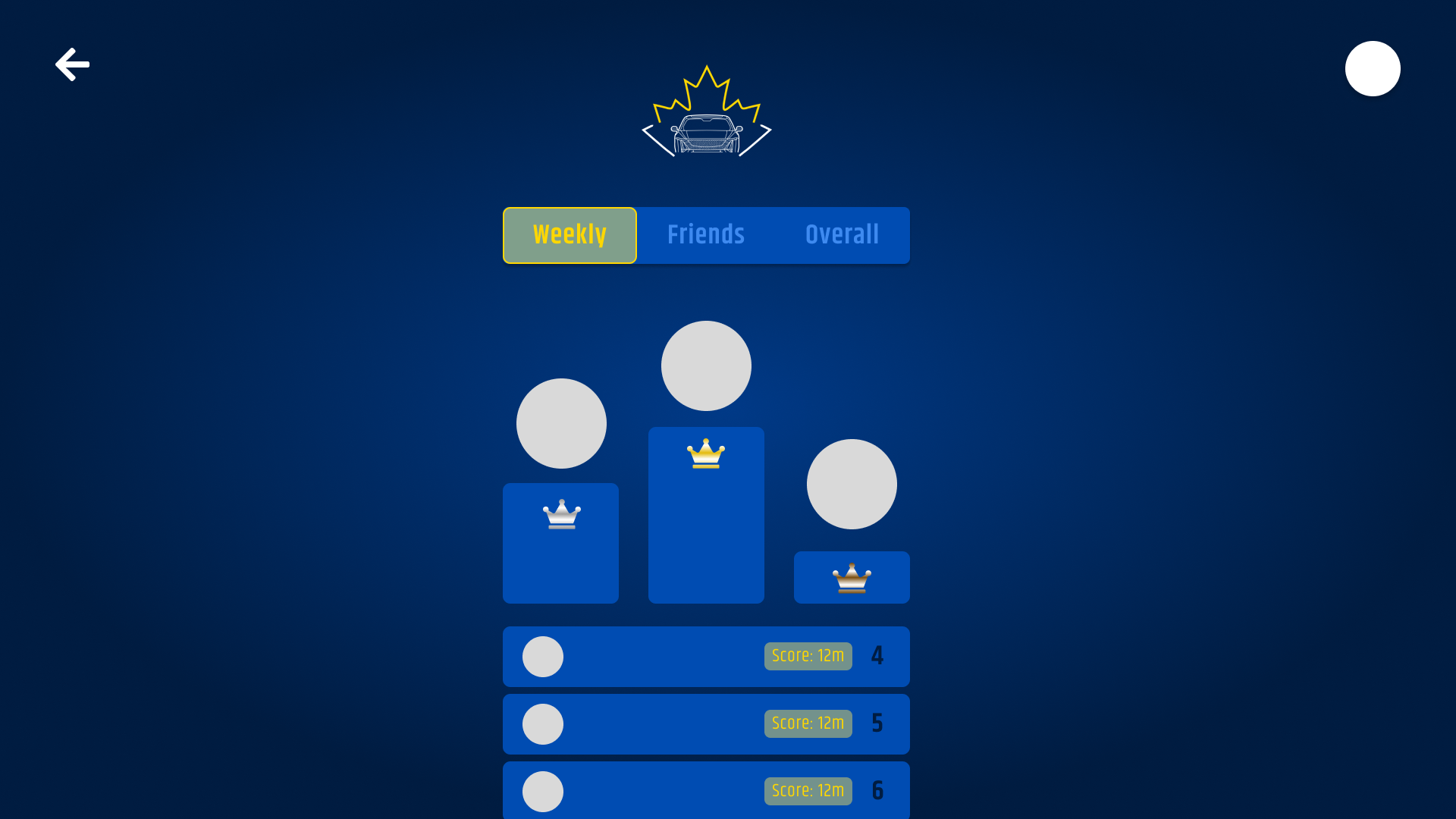
.png)


Eco-Car Game
Date:
6/1/2025

(01) Overview
The idea sparked among a group of students from an eco-car design team who noticed that many kids don’t know much about energy and sustainability in electric vehicles (EVs). Even for us, as engineering students, we only started learning about these topics fairly late. With EVs becoming more common, we felt it was important to introduce the next generation to the basics early on in a way that’s fun, accessible, and engaging.
Through chats with teachers and quick surveys, we explored how kids currently learn about energy and sustainability (spoiler: they usually don’t love it). We realized the core problem wasn’t a lack of information—it was how it was being delivered. Learning about gas vs. electric vehicles felt too abstract and textbook-heavy. So, we reframed the challenge: how do we turn vehicle technology and sustainability into something players want to explore? Our answer was to wrap it all inside an upgrade-based racing game where every mechanic teaches something useful—without feeling like homework.
Primary Objective:
- To educate players about the transition from gas-powered vehicles to electric vehicles through engaging gameplay, upgrades, and quizzes, while also teaching the importance of sustainability and energy efficiency.
Secondary Objectives:
- Inspire interest in science, technology, engineering, and math (STEM).
- Encourage problem-solving through interactive mini-games.
(02) Ideate
After determining the problem and our objectives, the fun brainstorming session began, where we poured out our thoughts and ideas. We landed on a general structure of the game:
- Starting Point: Players begin with a basic gas-powered car and progress by upgrading components at six nodes.
- Core Mechanics:
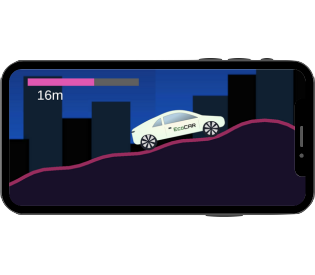
- Racing: Drive through various terrains while maintaining speed and fuel/battery efficiency.
- Upgrades: Unlock upgrades at each node after completing educational tasks.
- Challenges: Solve puzzles or participate in mini-games to learn about car technology.
- End Goal: Fully upgrade the car to an electric vehicle with enhanced performance.
As the lead designer for the project, I also created mood boards with the developers and other designs, ensuring our visions are aligned for the visual aspect of the game as well.
During the ideation process, we also spoke with a professor at the University of Waterloo who has had game development experience. We presented our ideas to him, and he was able to provide some feedback on lo-fi/hi-fi design processes as well as general feedback on the feasibility of our ideas.
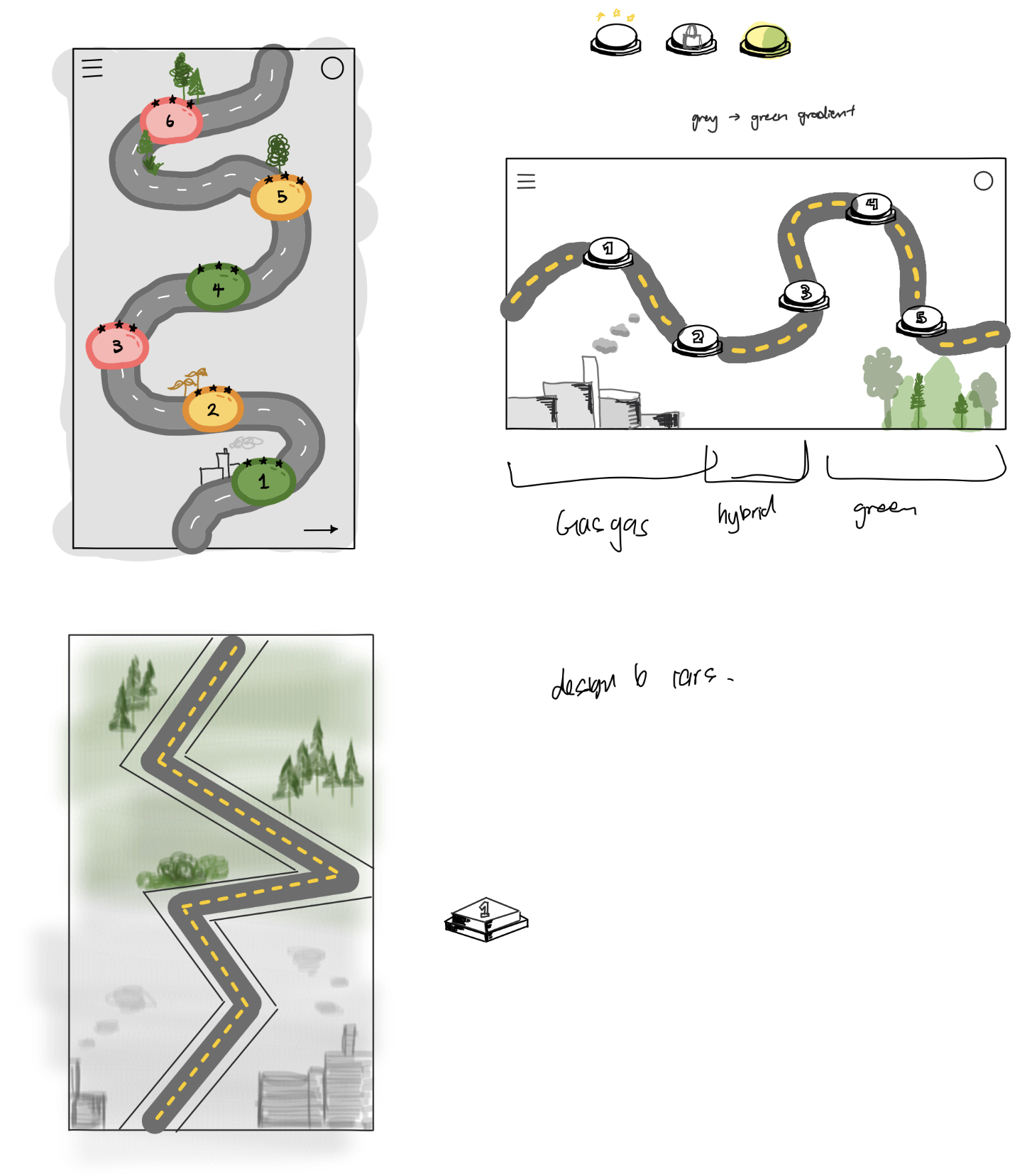
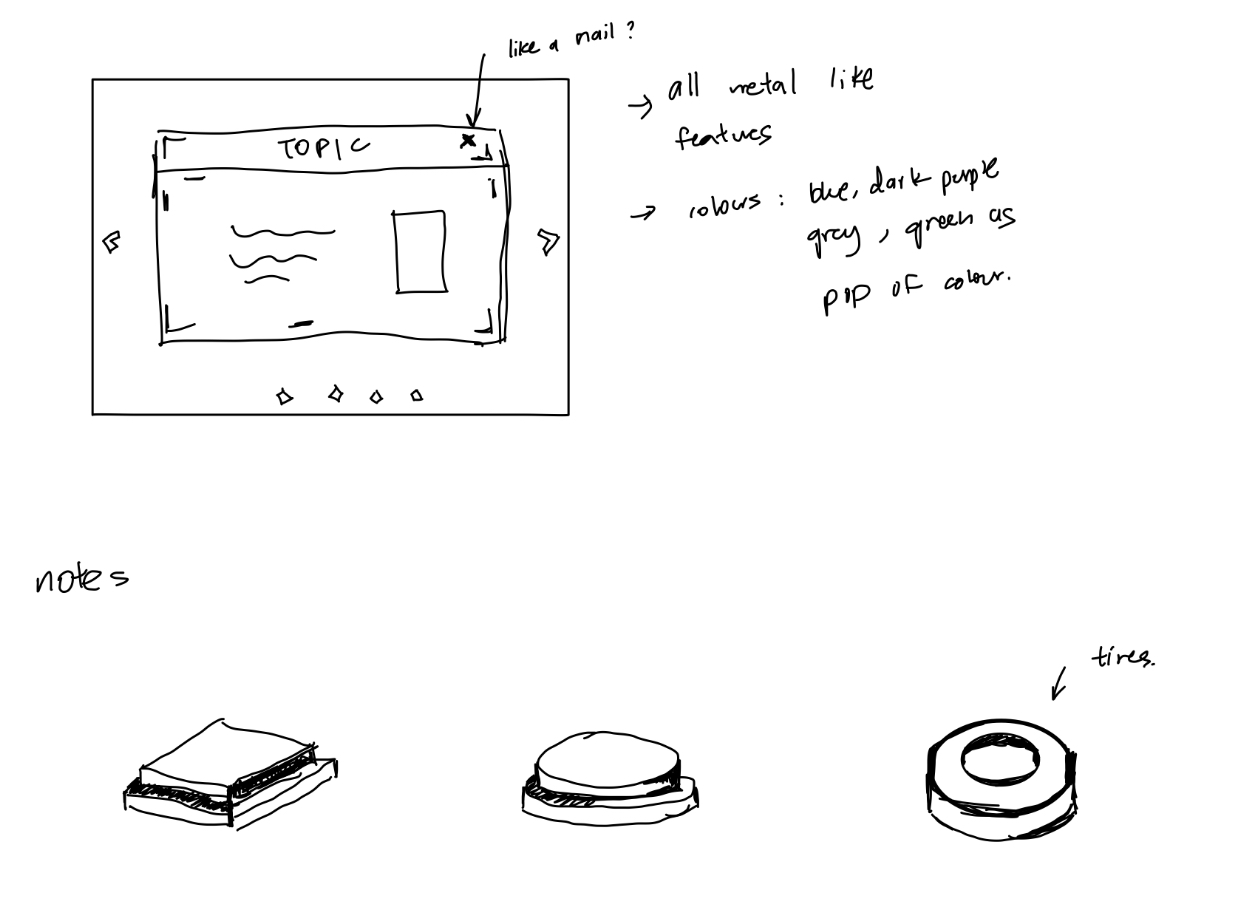
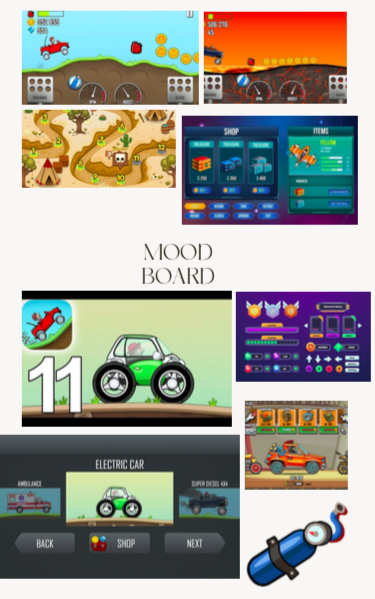
(03) Prototype/Refinement
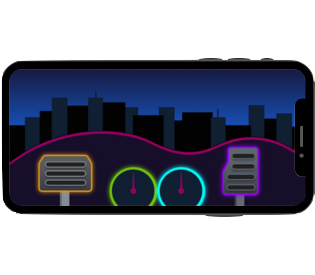
We built early prototypes using Unity and Figma to test what worked and what didn’t. The focus was on three key parts: the roadmap UI, displays of educational nodes, and the mini-games following the completion of an educational task.
As the UI/UX designer, my focus during prototyping was on creating intuitive, age-appropriate interfaces that balanced gameplay with learning. I started by sketching low-fidelity wireframes for the core screens—driving HUD, upgrade nodes, and the mini-game layouts. I paid close attention to visual hierarchy and clarity, ensuring that important feedback (like energy usage or speed) was easy to spot at a glance. We also prototyped interactions for our first two upgrade nodes (Tires and Aerodynamics) in Figma and Unity, testing layouts for educational pop-ups, drag-and-drop components, and feedback animations.
Throughout, I prioritized quick comprehension, minimal cognitive load, and responsive controls to keep players focused on learning through play—not on figuring out what to click. Early mockups were shared with students and team members to identify confusion points, which helped shape our next round of design improvements.
User testing was also done with other members on the design team, although not our primary user, they were able to provide more technical focused feedbacks, including the accuracy of the content, how to improve movement of the car using Unity, whether interactions were intuitive etc.
(04) Final Design
.png)
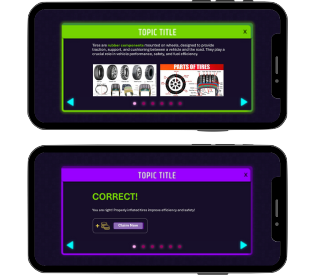
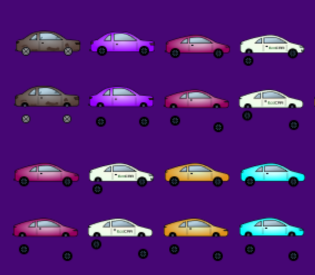
(05) Takeaways
After taking our first version of the game to user testing with middle school students, we received a lot of good feedback from both the students and the teachers. Let's be real here, middle students do not care about our feelings at all… The feedback was brutally honest, some maybe a little too harsh. However, they are the primary users so we cannot overlook anything they say.
(06) Next Steps
Currently we are working taking the feedback from the middle school students, organizing them and seeing which are a common occurrence amongst multiple users, and which are more based on personal preference. Taking these insights and continuing our iteration for version 2 of the game.